
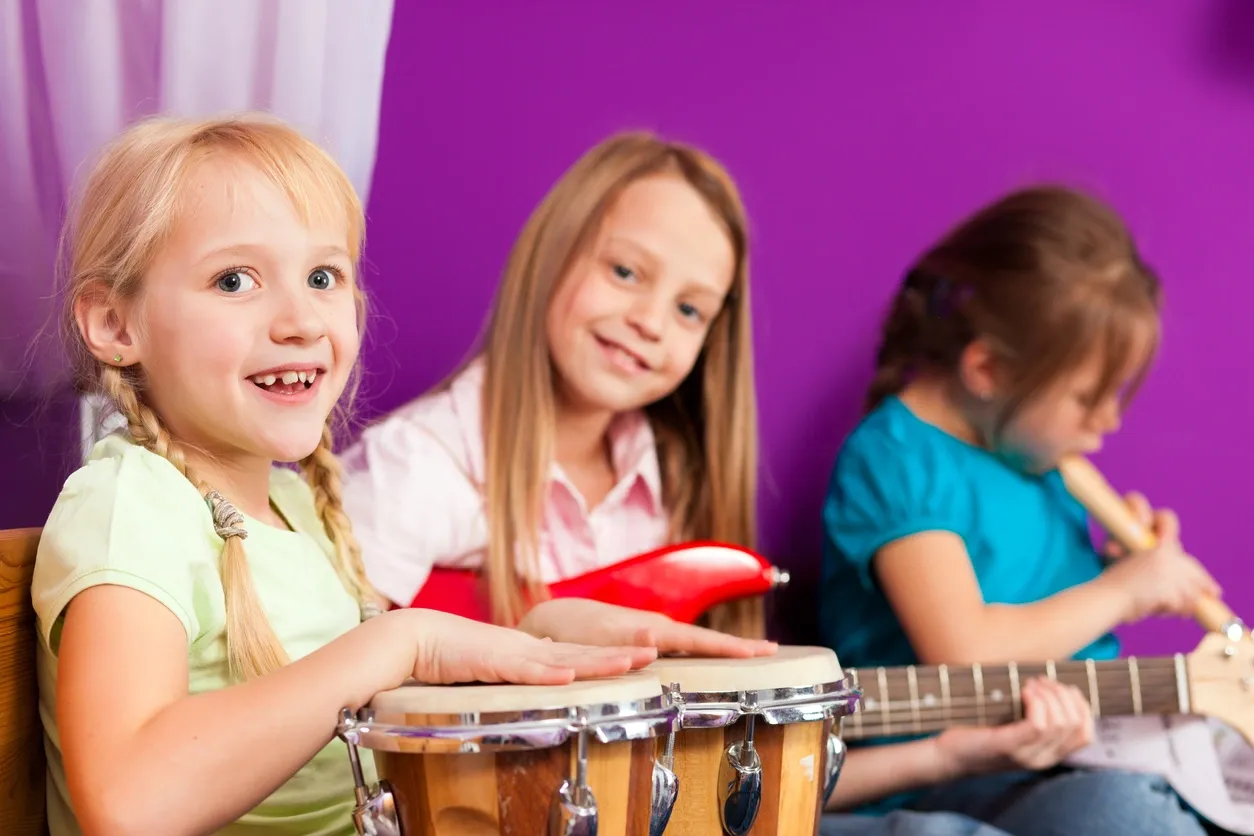

People from all ethnicity and backgrounds may communicate with one another via the global language of music. Introducing children to a diverse range of musical genres opens their minds to the rich tapestry of world cultures. Through songs and rhythms from various countries, children develop an appreciation for diversity and gain insights into different traditions and customs.It increases their viewpoint and cultivates a global outlook, encouraging a feeling of community and respect for others.
Go back to the time when you heard the favorite music of yours? How it made you tap your feet, sway your hips, or even sing along? From a young age, music has a mystical power that captures our attention and shapes our life. In this article, we’ll dive into the enchanting realm of early childhood music and uncover its incredible benefits for the development of young minds. So, let’s embark on this melodic journey together!
The Rhythm of Learning
Our brains are programmed from birth to process information. During early childhood, this capacity for learning reaches its peak. It is a crucial time when children’s brains are like sponges, eagerly soaking up everything they encounter. During this time, introducing music into their life may have a significant influence on how they grow socially, emotionally, and cognitively.
Boosting Cognitive Abilities
Have you ever noticed how music can enhance your concentration? Well, the same goes for children. Engaging in musical activities helps strengthen their cognitive abilities. Early musical exposure has been found to enhance spatial-temporal abilities, which are crucial for maths and problem-solving. Moreover, playing an instrument stimulates both hemispheres of the brain, fostering better memory retention and enhancing language skills.
Emotional Expression and Social Skills
A language that communicates to our emotions, music is more than simply notes and melodies. For young children who might find it challenging to express themselves verbally, music becomes a powerful outlet. Singing, dancing, and playing instruments allow them to convey their feelings, fostering emotional intelligence. Furthermore, music brings people together, encouraging social interaction, cooperation, and empathy. It’s like a harmonious orchestra of emotions and connections.
Fine-Tuning Motor Skills
Children that participate in musical activities are developing their motor abilities in addition to utilising their voices and tapping their feet. Music demands the mind and body to work together, whether you’re clapping along to a beat, playing the drums, or plucking guitar strings. Children improve their dexterity, motor control, and hand-eye coordination through repetitive activities. Let those little fingers and toes be led by the beat, then!
Language and Literacy Development
The same way that music has its own language, it also has an impact on how well-developed spoken and written language abilities become. Singing nursery rhymes, reciting lyrics, and imitating rhythms expose children to the nuances of language. These experiences lay a solid foundation for vocabulary expansion, pronunciation, and phonological awareness. So, don’t be surprised if your little one’s first words are accompanied by a melody!
Cultivating Creativity
Creativity is like a garden waiting to bloom, and music is the key that unlocks its potential. Early childhood music nurtures imagination and originality. It encourages children to explore different sounds, experiment with melodies, and compose their own tunes.Children who are immersed in the arts have a special sense of creativity that will bloom throughout their entire lives.
Confidence and Self-Esteem
Imagine using a microphone while standing on a stage and singing your favourite song. Isn’t that sense of confidence and success priceless? Children have various opportunities to shine in early childhood music performances. These accomplishments, whether it be playing an instrument well or participating in a school concert, increase their self-esteem and foster pride in their skills.
Multicultural Awareness
People from all ethnicities and backgrounds may communicate with one another via the global language of music. Introducing children to a diverse range of musical genres opens their minds to the rich tapestry of world cultures. Through songs and rhythms from various countries, children develop an appreciation for diversity and gain insights into different traditions and customs.It increases their viewpoint and cultivates a global outlook, encouraging a feeling of community and respect for others.
Stress Relief and Emotional Well-being
Even young toddlers can suffer stress and anxiety in the chaos of modern life.Music serves as a soothing balm for their minds and souls. The calming melodies and rhythmic patterns have a profound impact on their emotional well-being. Listening to music or engaging in musical activities helps reduce stress levels, promotes relaxation, and improves mood. It’s like a musical therapy session that uplifts their spirits and brings joy to their hearts.
Enhanced Memory and Attention Span
Have you ever questioned why it’s simpler to recall song lyrics than a list of facts? Music has a unique ability to enhance memory and boost attention span. Children are better able to recall knowledge because of the stimulating effects that rhythm, melody, and repetition have on the brain’s neuronal connections. Whether it’s learning a new song, memorizing musical patterns, or mastering a piece on an instrument, their memory and focus get a significant workout.
Family Bonding and Quality Time
Music has a magical way of bringing families together. Music forges enduring memories and improves the link between parents and children, whether it’s lullabies before bed, dancing to favourite songs in the living room, or going to concerts together. It provides opportunities for quality time and shared experiences that build a foundation of love, trust, and connection. Therefore take a musical instrument, crank up the volume, and let the music serve as the journey’s soundtrack for your family.
Conclusion: A Melodic Symphony of Growth
As we conclude this harmonious exploration, it’s clear that early childhood music offers a multitude of benefits for young minds. From cognitive development to emotional expression, motor skills to language acquisition, the power of music is undeniable. It fosters creativity, cultivates confidence, and promotes multicultural awareness. So, let’s embrace the magic of music and provide our children with the melodic symphony they need to flourish and thrive. After all, as Friedrich Nietzsche once said, “Without music, life would be a mistake.”
Remember, the journey of musical discovery begins with a single note. So, let’s play on and watch as our little ones dance to the rhythm of life.
Frequently Asked Questions (FAQs)
A. How early should parents introduce music to their children?
B. Can music help improve a child’s language skills?
C. Do children need formal music lessons to benefit from music?
D. What types of musical activities are suitable for infants and toddlers?
E. How does music contribute to emotional development in children?
F. Can music enhance a child’s academic performance in other subjects?
G. Is it necessary for children to learn to read music to enjoy its benefits?
H. How can parents and educators incorporate music into everyday routines?
I. Are there any potential drawbacks or limitations of introducing music at an early age?


