
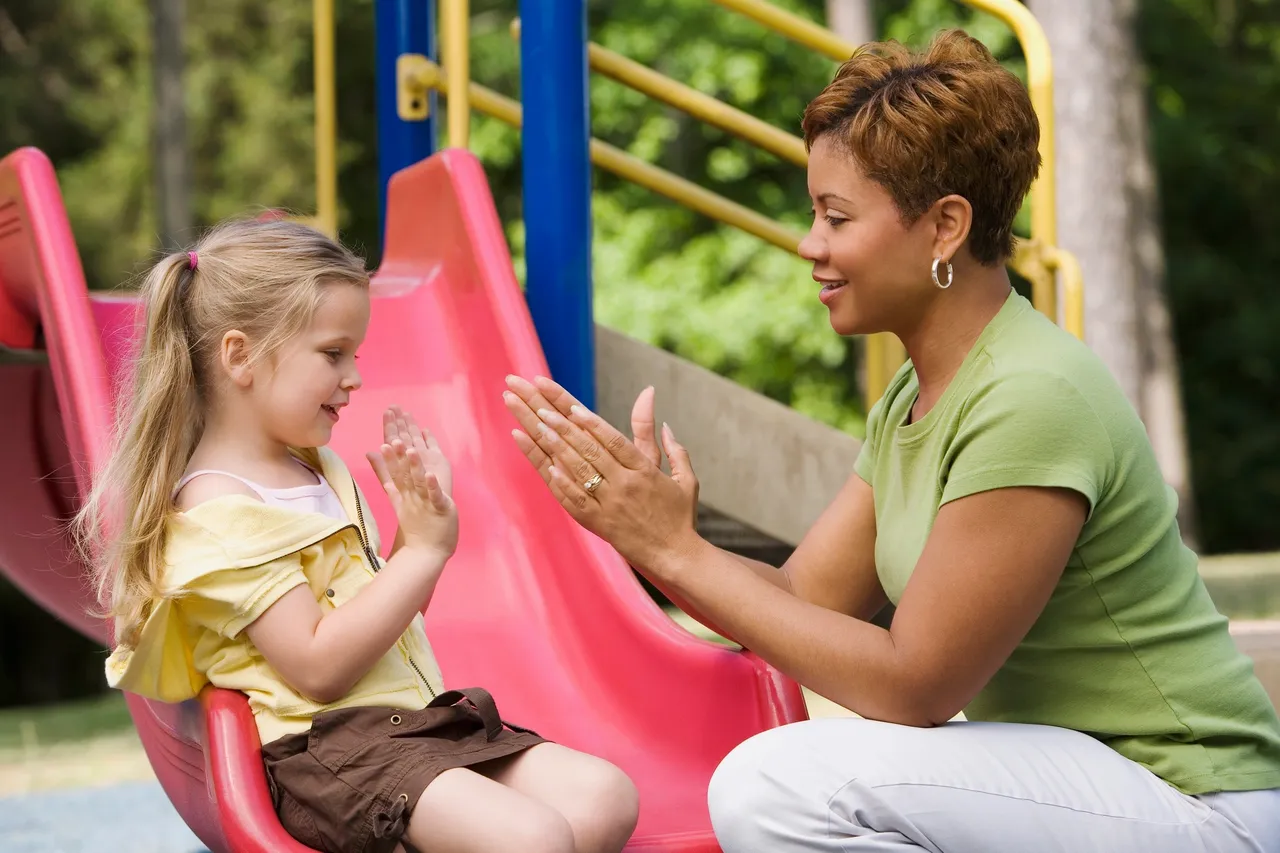

But what happens when we let kids be kids?
Well, let me put it to you: play is an essential part of every child’s life and a vital role in their overall development.
Join us on a journey through the wild and wacky world of play, where we discover the surprising ways, it shapes children’s minds and builds the foundation for a lifetime of learning.
Through play, children learn how to interact with others, develop communication skills, and build relationships.
For example, children learn how to take turns, share toys, negotiate, and compromise when playing with others. These are important social skills that help children develop healthy relationships with others.
When kids play, they have the chance to express their emotions and feelings in a safe and comfortable environment.
For instance, when children play, especially with other kids or toys, they may act out scenarios or use puppets to express how they are feeling.
This helps them understand and manage their emotions, which is an essential skill for building resilience and coping with life’s challenges.
Another important reason why play is important for your little ones is that it helps with their cognitive development as they indirectly learn problem-solving skills, critical thinking, and creativity.
We should talk about the different types of play that are safe and best for your little ones.
There are different types of play that children engage in, and each type of play has its own benefits for child development.
The first type of play we’ll be discussing is unstructured play
Unstructured play is a type of play that is spontaneous, self-directed, and free-form.
Children engage in unstructured play without any specific rules or guidelines, allowing them to explore their creativity, imagination, and problem-solving skills.
This type of play is important for child development as it provides children with an opportunity to engage in self-directed learning and discovery, which helps them develop independence, confidence, and resilience.
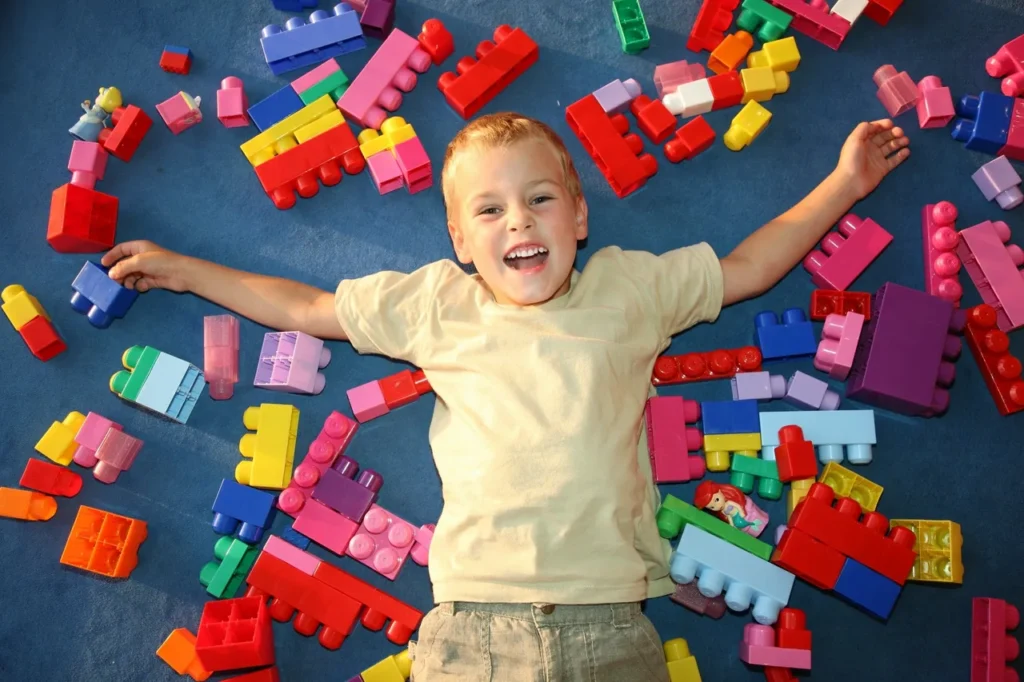
During unstructured play, children have the freedom to choose what they want to do and how they want to play, which gives them more room to explore their interests, develop their creativity, and learn through trial and error.
For instance, a child who is interested in building activities may use blocks or other materials to construct a tower or a bridge, and the child unconsciously learns about engineering, balance, and spatial awareness through this process.
Unstructured play also allows children to develop their social skills.
When children engage in unstructured play, they learn how to interact with others, negotiate, and compromise, especially when they play together with other kids. These social skills are important for building healthy relationships with others and developing emotional intelligence.
Unstructured play is also essential for emotional development.
During unstructured play, children have the freedom to express their emotions and feelings in a safe and comfortable environment.
A child who is feeling sad or anxious may use art materials to create a drawing or painting that reflects their emotion and learn how to express and manage their emotions through this process.
The second type of play is structured play
Structured play, also known as guided play, is a type of play where children engage in activities with a specific goal or objective in mind.
This type of play is often led by parents, caregivers, or teachers, who provide guidance and structure to the play.
Structured play has several benefits for child development.
First, it promotes cognitive development: When children engage in structured play, they are exposed to new concepts, ideas, and skills that help develop their cognitive abilities.
For example, when they play with puzzles, they learn problem-solving skills, spatial awareness, and critical thinking, which are important skills for academic learning and future success.
When children engage in structured play, they learn how to interact with others, communicate, and work together.
For example, when children participate in group activities like board games or team sports, they learn how to take turns, share, negotiate, and compromise.
Structured play also promotes physical development where they have the opportunity to develop their gross and fine motor skills.
For example, when children participate in team sports or dance classes, they develop their gross motor skills and they develop fine motor skills when they engage in activities like drawing or playing with small objects.
Incorporating structured play into a child’s playtime can be a fun and engaging experience for both parents and children.
You can organize a scavenger hunt for your child, where you provide clues and tasks for your child to complete.
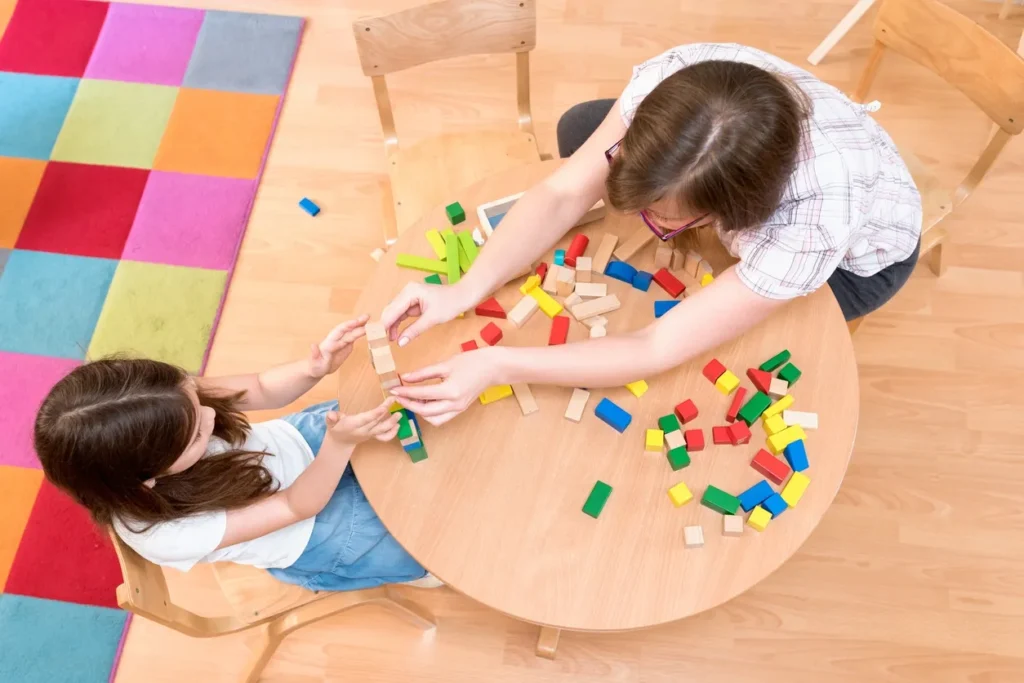
Or you can even decide to organize a baking or cooking activity with your child, where you provide guidance and structure for each activity to be carried out.
The third type of play is sensory play
This is one of the most effective types of play that involves engaging a child’s senses, including touch, sight, smell, taste, and sound, in order to promote learning and development.
When children engage in sensory play, they learn about cause and effect, as they experiment with different materials and their reactions.
Sensory play promotes language development as children describe the textures, colors, and smells of the materials they are playing with, and it also helps with fine motor skill development as children manipulate and explore different materials with their hands.
One fun and easy way to incorporate sensory play into your child’s daily routine is through play dough.
Do you know what that is?
Playdough is a versatile and engaging material that provides a range of sensory experiences for children.
It can be squished, rolled, molded, and shaped, providing endless opportunities for creativity and imagination.
You can add different scents, such as vanilla or lavender, to the play dough to stimulate your child’s sense of smell, or you can add food coloring to create a rainbow of colors for your child to explore.
Another fun way to engage your child’s senses is through a sensory bin.
A sensory bin is simply a container filled with different materials for your child to explore.
You can use a variety of materials, such as dried beans, rice, or pasta, to create a fun and stimulating sensory experience for your child and you can also add different toys or objects to the bin to encourage exploration and imaginative play.
Another trick for a more fun and messy sensory experience is finger painting.
Finger painting allows children to explore different textures and colors with their hands. It also helps with fine motor skill development as they manipulate the paint with their fingers.
You can use different colors of paint and provide different tools, such as brushes or sponges, to create a variety of textures for your child to explore.
You can also try out water play by setting up a water table or filling a large container with water and adding different toys, objects, food coloring, and scented oils for your child to explore.
The fourth type of play is imaginative play
Children are creative and imaginative beings with a whole lot of possibilities running through their heads.
Allowing kids to truly engage in imaginative play unlocks their creativity and imagination because they have the freedom to create their own scenarios, characters, and stories, which helps them develop new ideas and explore different possibilities.
In their imagination, they can become pirates, astronauts, doctors, or anything else they want to be.
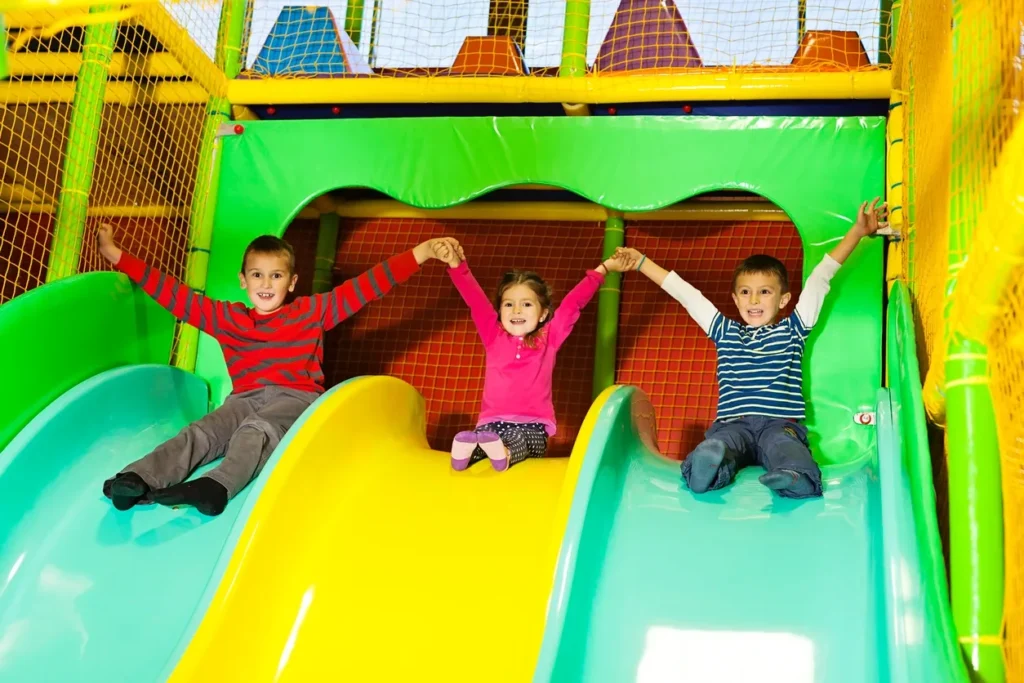
Imaginative play also promotes social development and cognitive development when they engage in this activity with their peers.
To support the kids in reaching their full creative potential, it is important to provide them with a variety of toys, props, and materials that stimulate their imagination.
This can include dress-up clothes, action figures, dolls, building blocks, and art supplies.
Conclusion:
And that’s a wrap on the importance of play in child development!
Remember, play isn’t just a fun pastime; it’s a crucial part of growing up. So, whether it’s playing tag, building forts, or even just pretending to be a superhero, make sure to give your kids plenty of time to let loose and have some fun. And who knows, you might just rediscover your own inner child in the process!


